Drawing on the work of artists whose applications to the Art Senses open call earned special recognition, the third edition of our Learning from Artists series explores the potential of sensory art practices to address a broad spectrum of sensory experiences and challenge ocularcentric and ableist conventions surrounding the presentation of and engagement with art.
Sensory art challenges the long-standing assumption that the primary way of encountering an artwork is through vision. Art spaces have historically been organised around looking, often privileging a supposedly universal viewer whose body is sensorially and neurologically normative. Yet human perception is not uniform; we encounter the world through complex combinations of senses, each activated to varying degrees, or not at all.
Sensory art has an innate capacity to address a broad spectrum of sensory experiences. It encompasses practices that deliberately emphasise the multisensory character of the human body. These approaches challenge normative ideas about perception and question the limits imposed by ocularcentric and ableist conventions. They invite us to rethink what an art encounter can be, rather than treating accessibility as an afterthought addressed only when an artwork is being brought to the public. As such, they align with the social model of disability, which explains disability as a product of social, environmental, and systemic barriers rather than of individual impairments.
Sensory art practices can activate the body as an interconnected perceptual system. Touch may be explored as a form of reading, vibration as a way of hearing, movement as a means of understanding space. Exploring a broad spectrum of sensory possibilities, artists working in this field create environments that invite audiences to touch, lie down, move around, close their eyes, listen from different positions, or physically enter an artwork. Others employ vibration, tactile surfaces, spatialised sound, responsive lighting, smell, taste, or interactive technologies, among others.


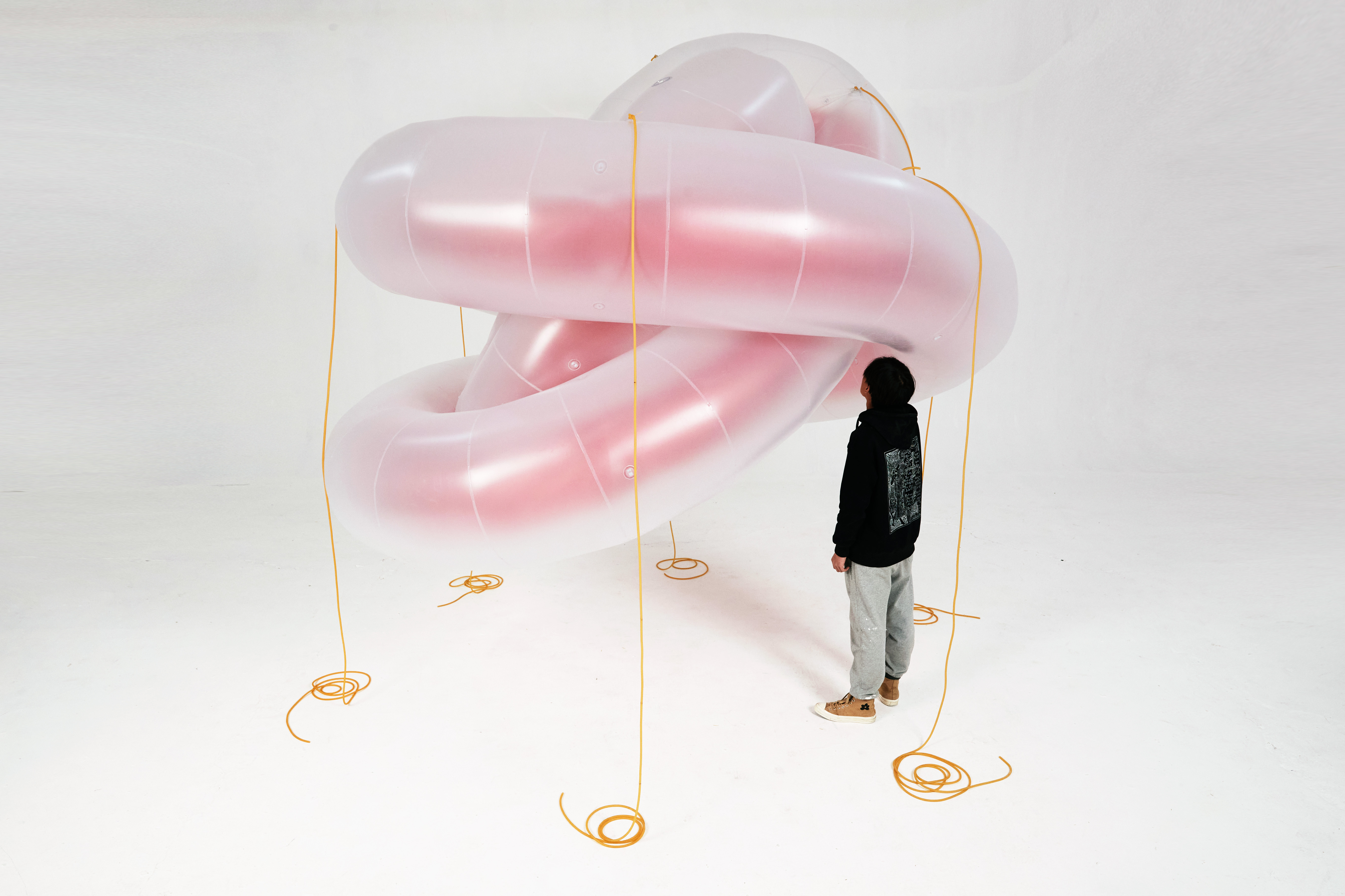
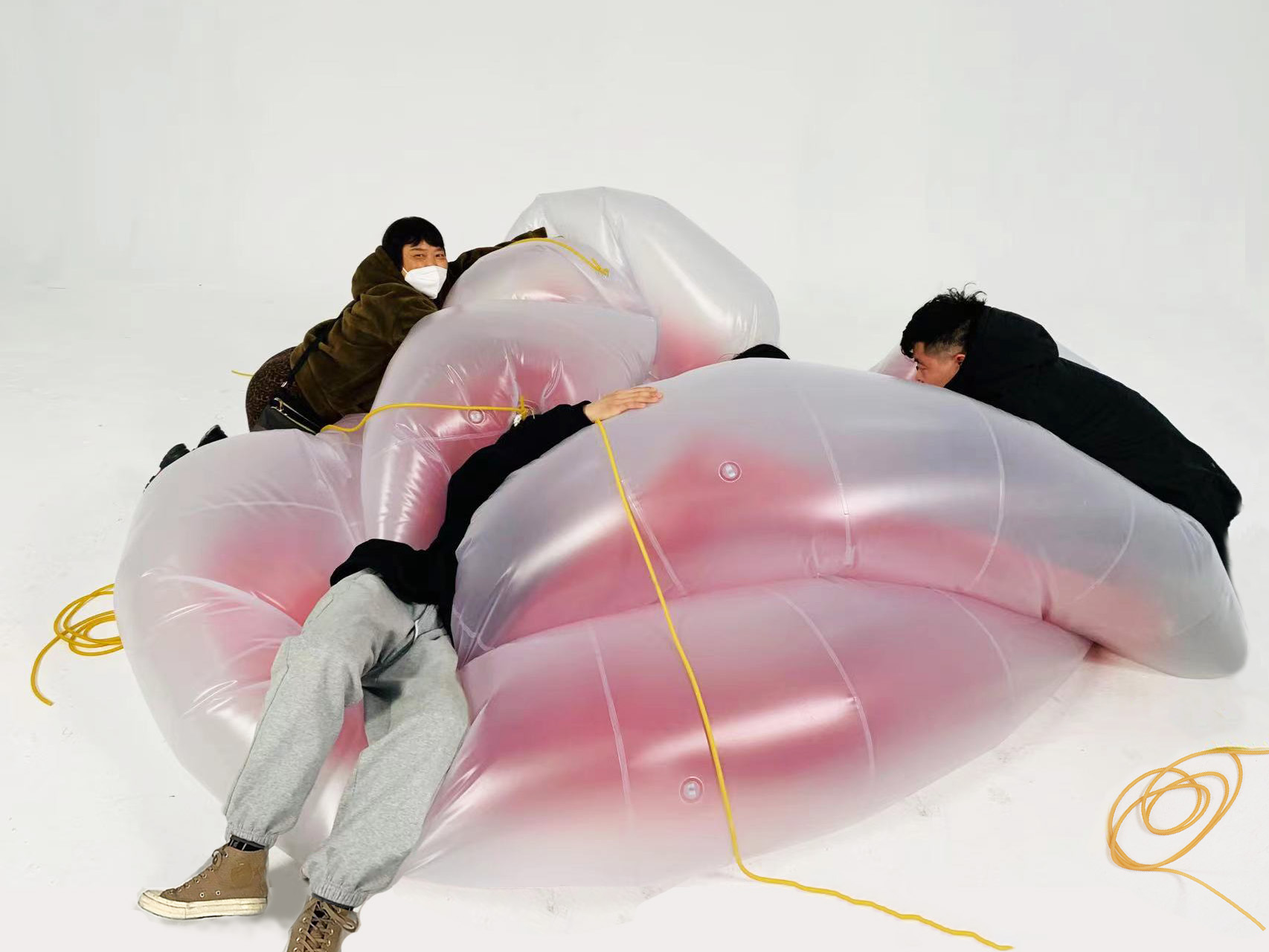
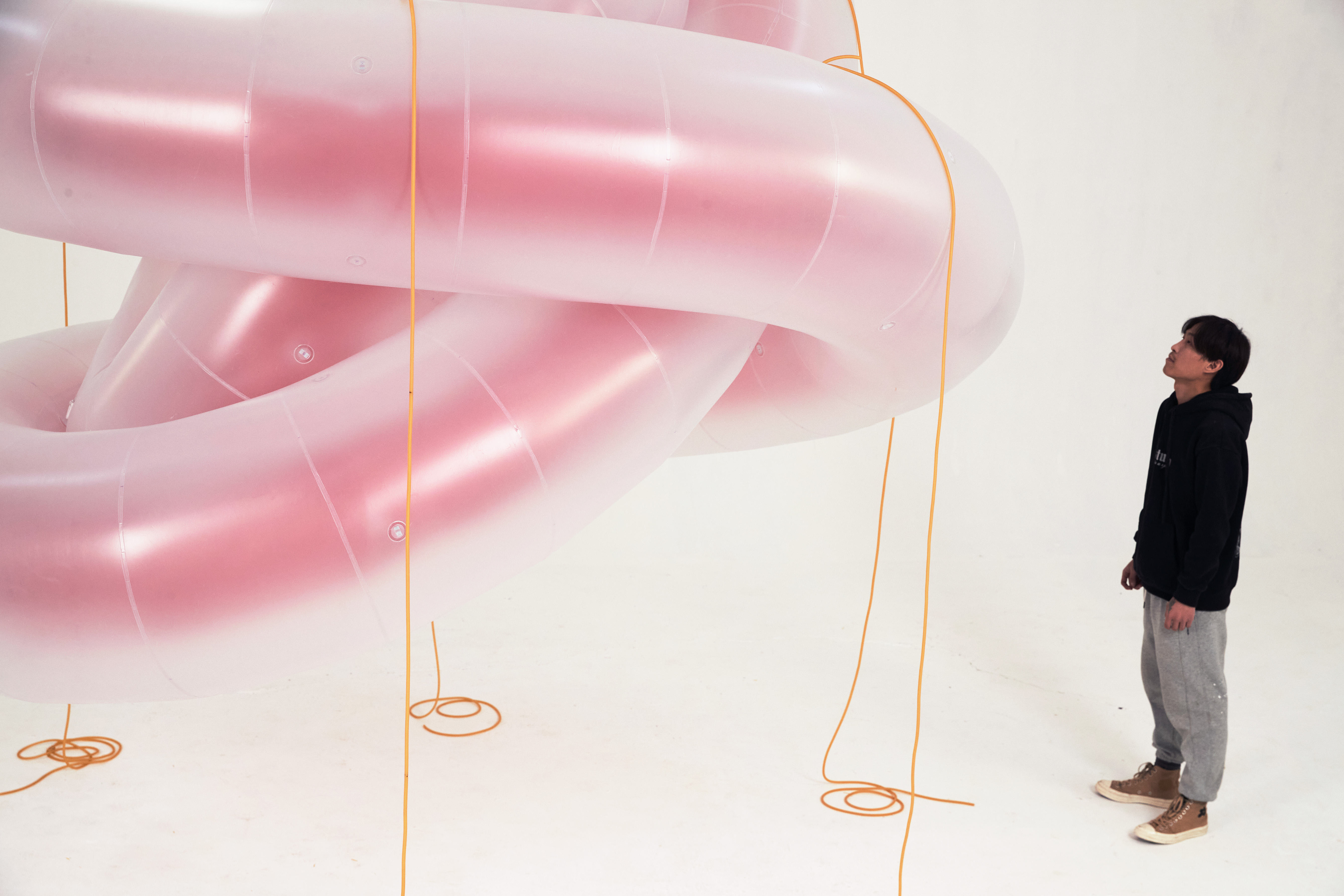
Such practices challenge conventional exhibition etiquette, which expects visitors to move in certain ways, stand at a prescribed distance, avoid touching, and look attentively at an object. Bao Rong, one of the artists shortlisted for Art Senses 2026, creates soft, enterable structures that invite people to touch or crawl into them and experience them freely with their entire bodies. While providing a playful and liberating interactive experience, these art installations stimulate both external and internal senses, shaping posture, movement, and emotional responses. They can turn tension into comfort or care into control, and vice versa.
Informed by phenomenology, affect theory, and feminist writings on the porous, interdependent body, Rong’s practice explores how softness can expose invisible social, spatial, and emotional forces that shape our behaviours and desires. Through these inhabitable environments, she seeks to transform the act of sensing into a way of encountering vulnerability, exhaustion, longing, and the unstable line between protection and entrapment.
Enigma (2023), one of Rong’s artworks to emerge from this line of inquiry, is a large-scale pneumatic structure composed of intertwined inflatable tubes. Its breathing motions and swaying ropes produce a sense of a living host. As visitors interact with it or enter its cocoon-like interior, the sculpture subtly guides their bodies, heightening awareness of balance, pressure, and vulnerability. Its softness becomes a form of gentle control, revealing the invisible forces, such as tension, intimacy, and unease, that shape how bodies inhabit space.
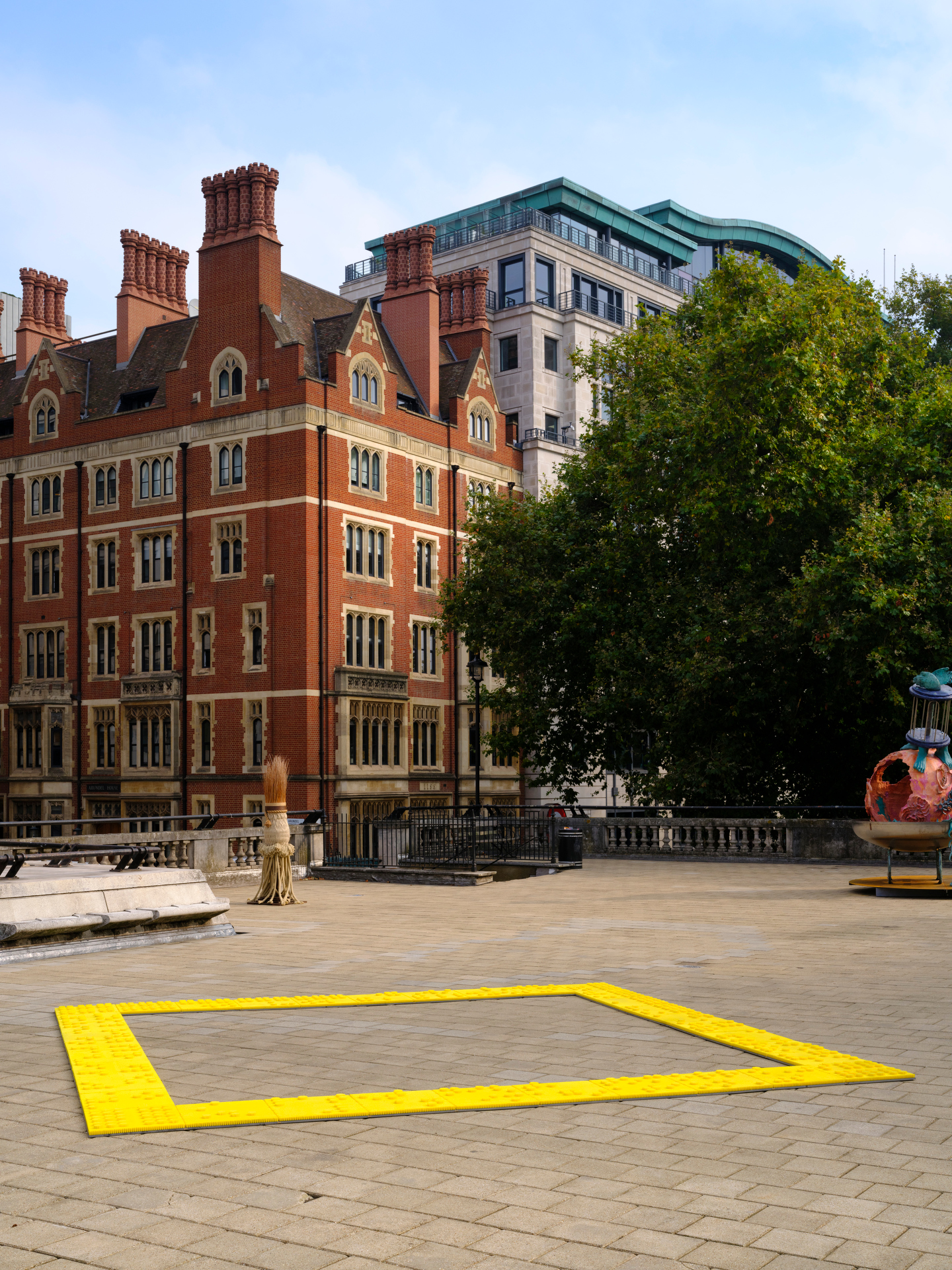
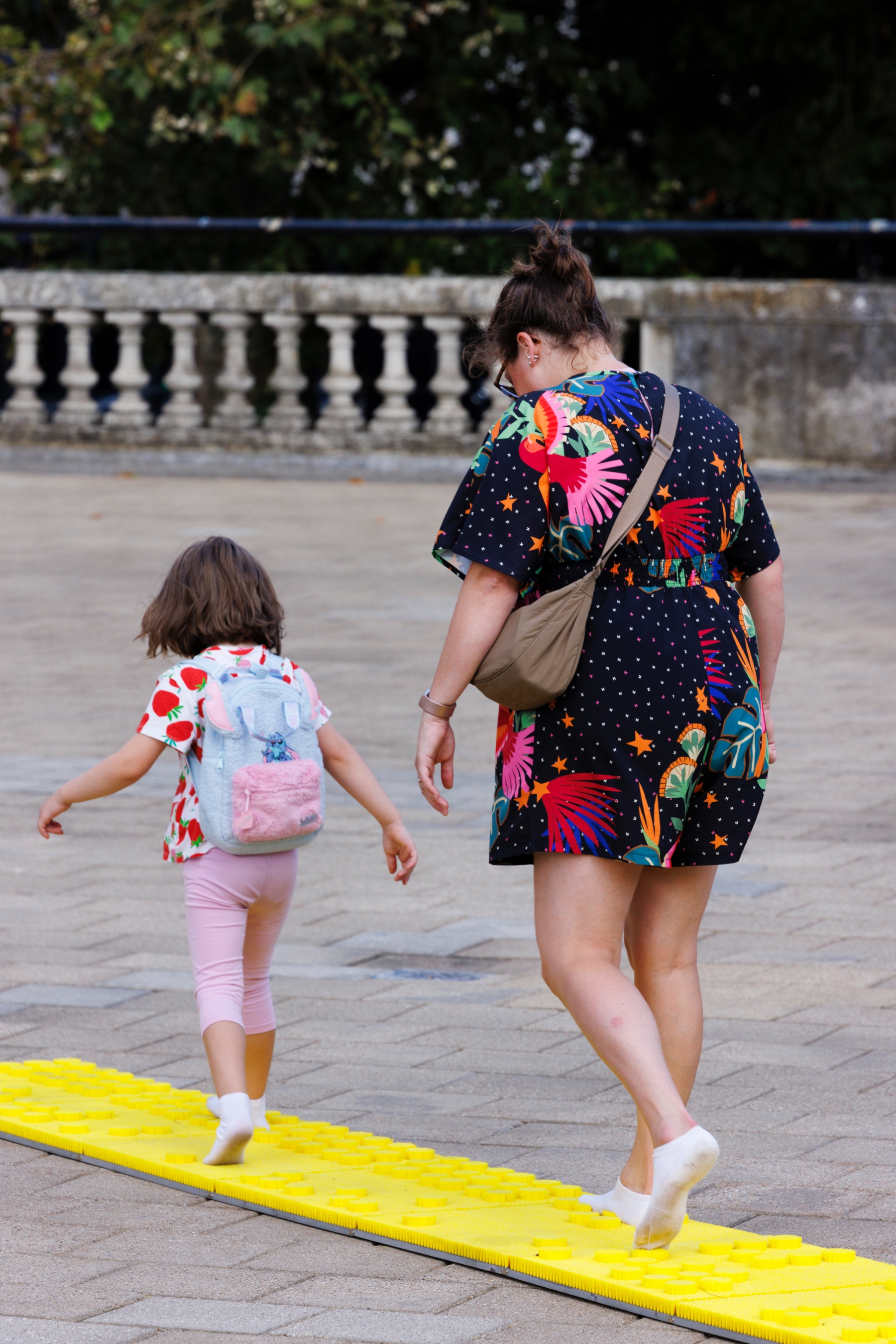
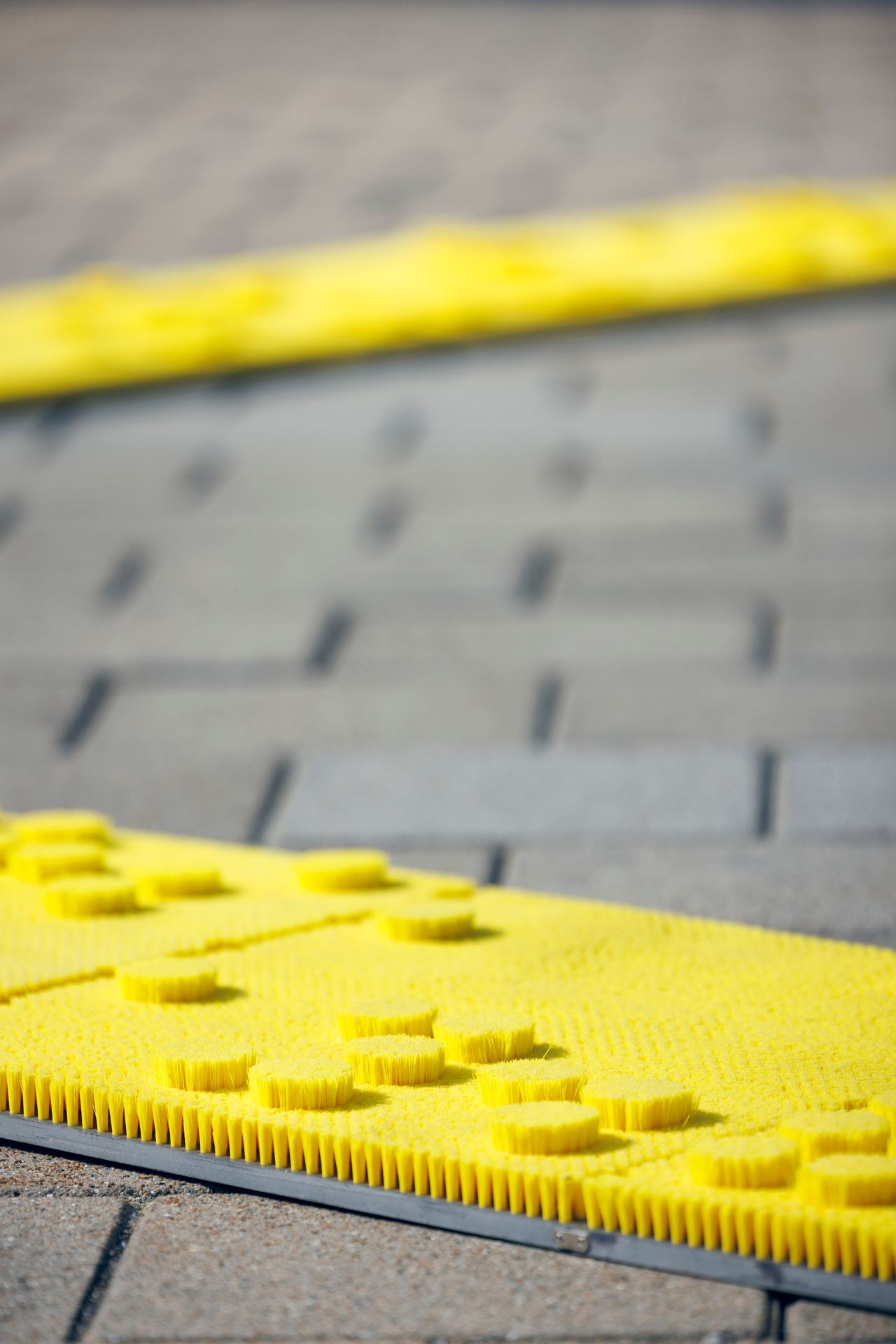
Exploring other ways to integrate diverse modes of perception into the artistic experience, Rong’s Yellow Path (2024) draws inspiration from the tactile yellow paving slabs designed to guide visually impaired pedestrians through Beijing. Tracing similar paths worldwide, the artist found many leading into walls or blind alleys, while others had become decorative zigzags. Critiquing urbanists’ disregard for visually impaired people, the work creates a continuous loop that evokes struggles with orientation and direction. The concrete slabs are transformed into lurid yellow tiles, the last colour typically perceived as sight deteriorates, and covered in dots forming a poem-work in Grade 2 Braille (a tactile writing system of condensed words and phrases) by visually impaired poet Alex Donnelly. An accompanying audio guide presents the poem in spoken form, extending the work’s sensory experience beyond movement, touch, and sight.


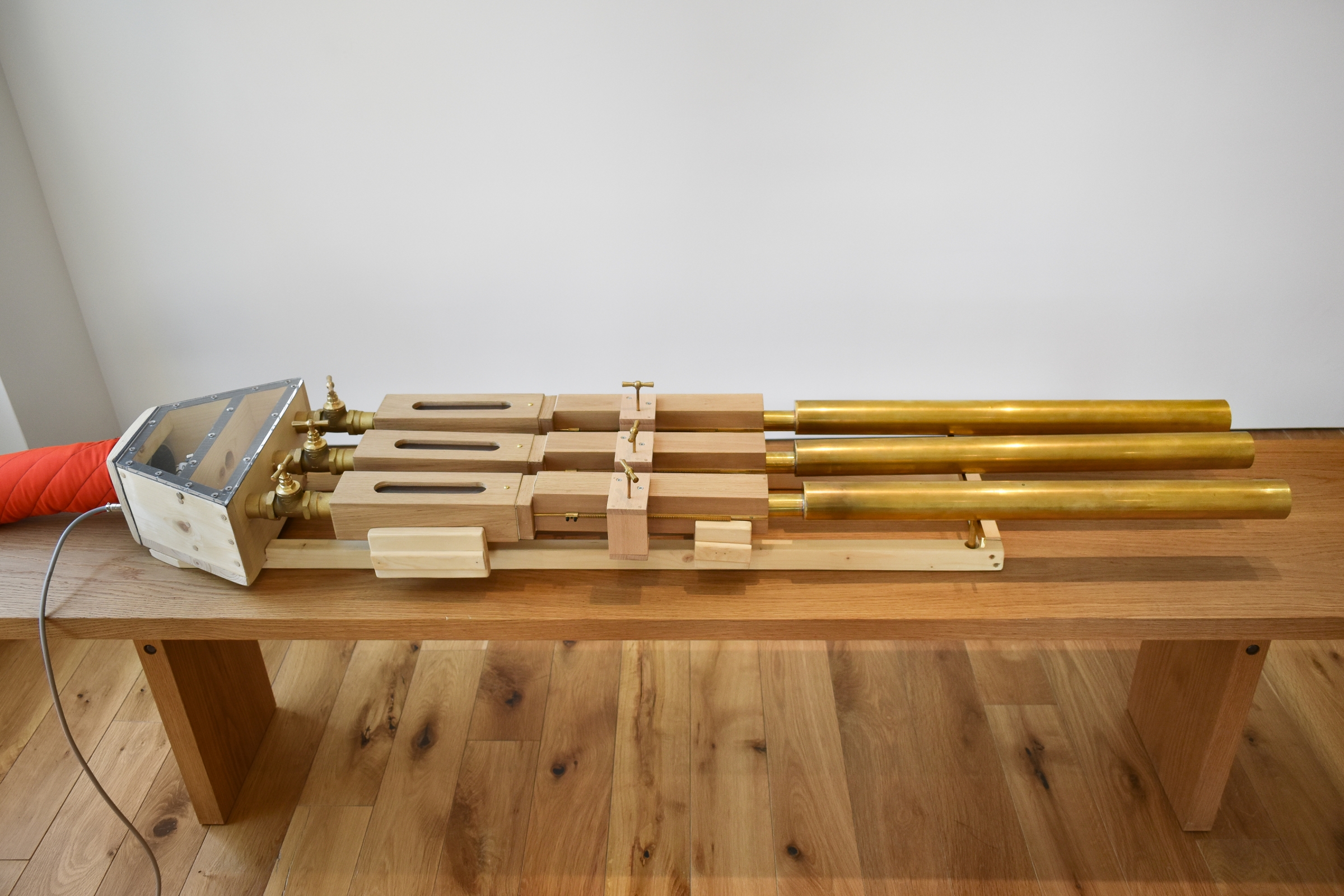
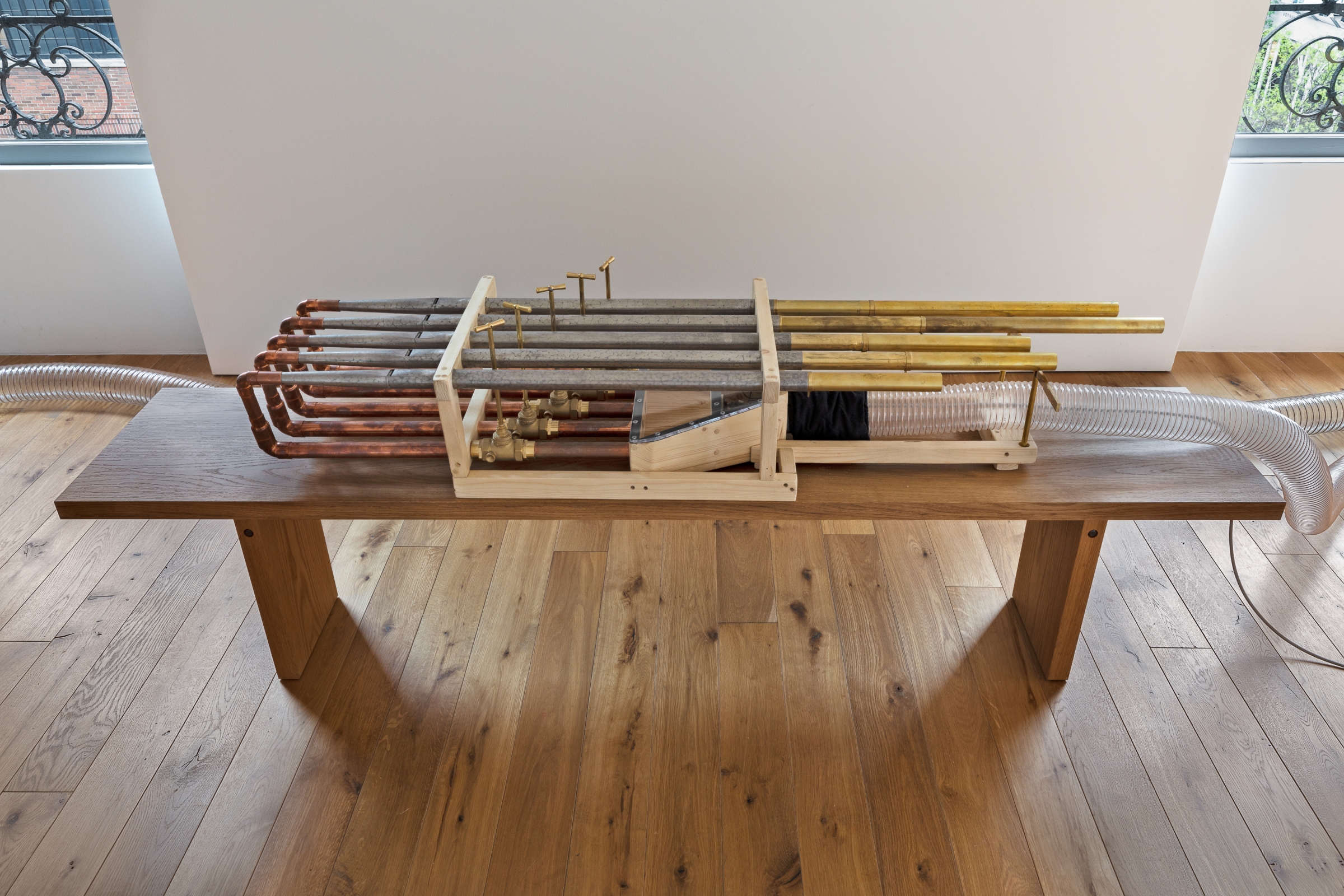
Challenging ableist conventions, the work of artist, musician, and composer Vincent Martial centres on sound and explores how it can be experienced beyond the sense of hearing. Organ Stops, his series of three original musical instruments—the pipe-koto, the sliding flutes, and the sliding reeds—departed from the idea of conceiving an instrumentarium that could be played by deaf and hard-of-hearing people. Following his research on air turbulence and using as a starting point two mechanical principles, the sliding mechanism and airflow control, Martial developed these instruments by exploring vibration, the sensory perception of air and touch, and frequency ranges perceived by people with varying degrees of hearing impairment. These unique pieces were part of two projects by artist and composer Tarek Atoui, The Reverse Session at Tate Modern in London and The Organ Within at the Solomon R. Guggenheim Museum in New York City.
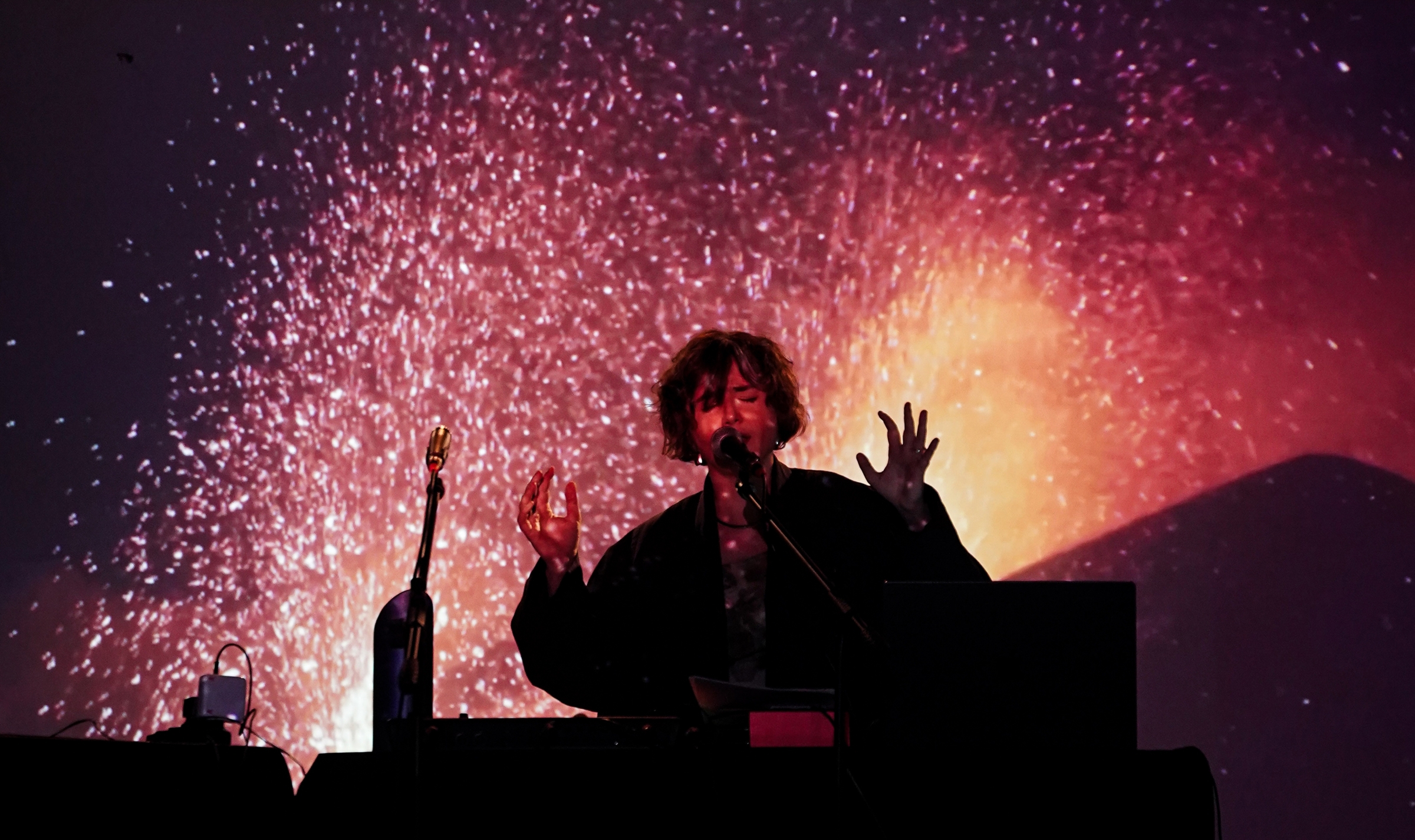
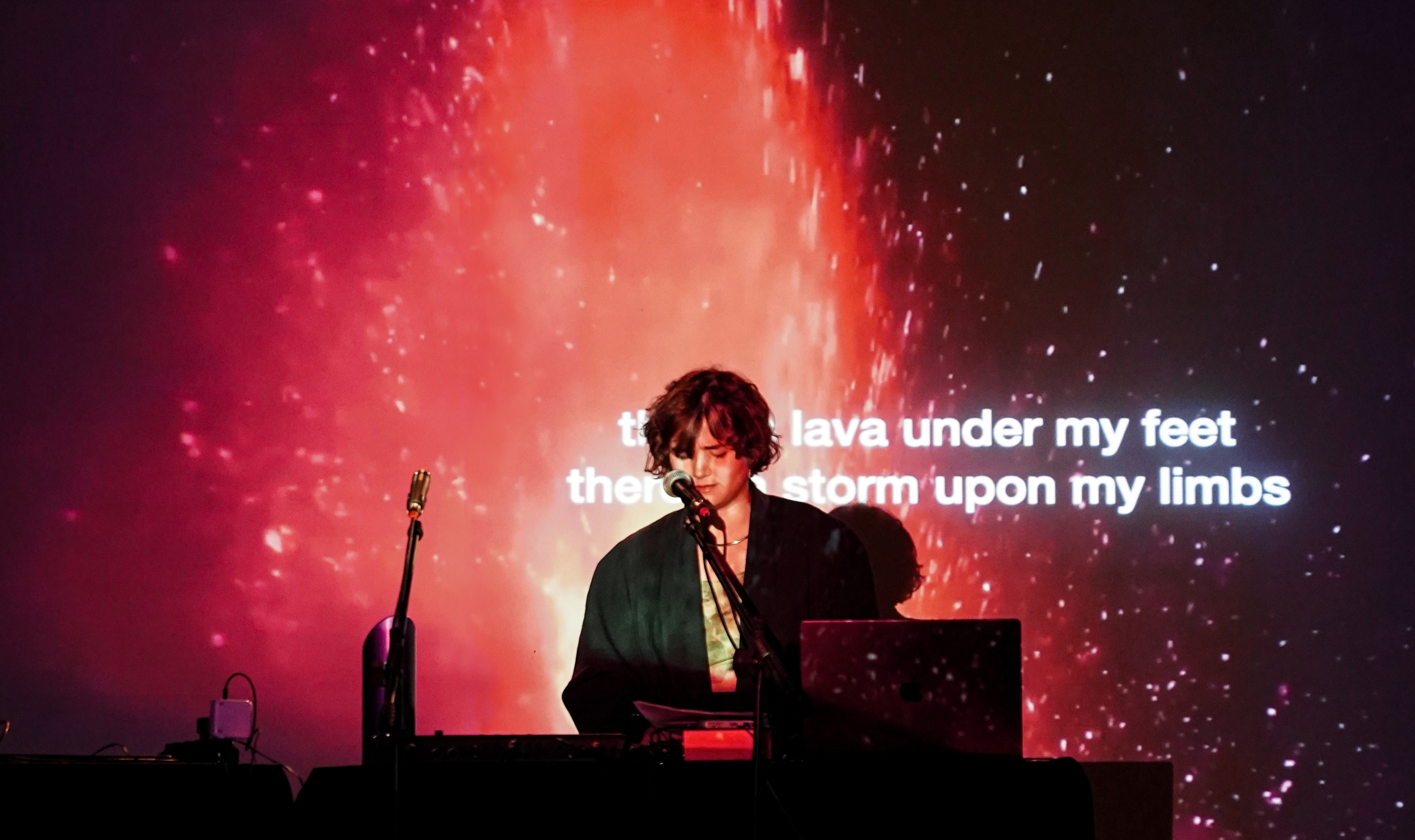
Similarly, Mother’s Singing (2025), a project by artist, architect, and researcher Sofia Boarino, explores listening beyond hearing, expanding access to sound for deaf and hard-of-hearing audiences through a vibration-based performance. Drawing on infrasound recordings of Mount Etna, collected with the Istituto Nazionale di Geofisica e Vulcanologia in Catania, Boarino reinterprets the volcano’s continuous low-frequency vibrations through voice, electronic composition, and spatial sound. The performance invites an embodied encounter with geological time and force through sound, text, and vibration, expanding listening beyond the ears to include skin, breath, and internal resonance. At the intersection of art, architecture, and environmental research, it frames infrasound as a shared vibrational condition connecting human bodies, landscapes, and non-human intelligences.
Artworks intentionally developed around specific sensory impairments can expose ableist limitations within existing infrastructures and suggest new forms of artistic and social exchange. However, an artwork doesn’t need to have been created explicitly as an accessibility project to challenge ableist conventions. Sensory art inherently offers experiences that are not simply more inclusive versions of ocularcentric visual art. It can produce entirely different relationships between artwork, individual, space, and time, while creating conditions that make other relations possible. And while an expanded approach to the senses makes art more accessible, it simultaneously makes it more formally and conceptually adventurous.
Featured Artists
Bao Rong — baorongstudio.com
Vincent Martial — vincentmartial.com
Sofia Boarino — sofiaboarino.com
Project by Therme Art
Art Senses is created by Therme Art, an international cultural initiative advancing Therme Group’s mission to promote wellbeing. In close collaboration with Therme Group, whose expertise in innovative environments and wellbeing infrastructures informs the programme’s vision, Therme Art supports and develops artistic and cultural experiences that generate positive social impact.
In addition to funding, mentorship, visibility, technical resources and support, Therme Art offers the possibility for projects developed within Art Senses to be realised permanently at Therme Group’s facilities worldwide, extending the artistic dialogue from the studio and exhibition context into lived, public environments that embody the programme’s curatorial aims.